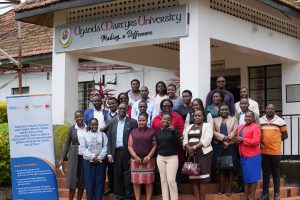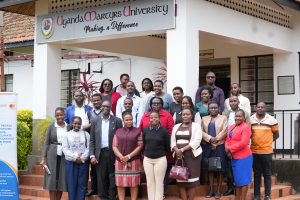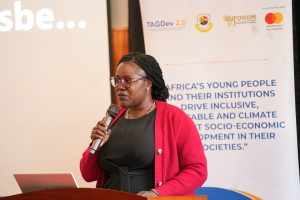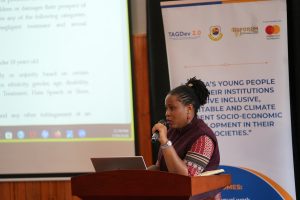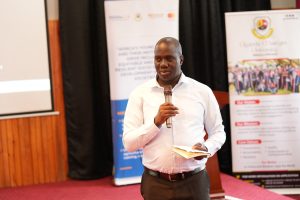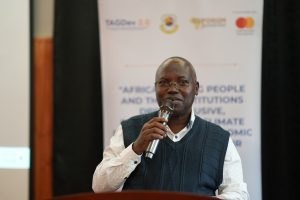
Uganda Martyrs University (UMU) has reaffirmed its commitment to creating a safe, respectful, and inclusive learning and working environment through a comprehensive Staff Safeguarding Training held on 29 July 2026. The training brought together representatives from the university’s faculties, administrative departments, management, and support units to strengthen staff capacity in safeguarding principles and institutional response mechanisms. The training forms part of the activities under the TAGDev 2.0 Programme, which is being implemented at Uganda Martyrs University with support from the Regional Universities Forum for Capacity Building in Agriculture (RUFORUM). The programme continues to strengthen institutional systems and promote inclusive, equitable, and safe learning environments across the university.
Officially opening the training, the Deputy Vice Chancellor, Rev. Dr. Fr. Christopher Mukidi, emphasized that while the term safeguarding may be relatively new, the values it represents have existed throughout history. He noted that societies have always relied on customs, values, and rules to protect individuals and promote responsible conduct, and that modern institutions are now formalizing these principles through policies and systems that safeguard the dignity, safety, and well-being of every member of the university community. “The concept of safeguarding may be new in terminology, but its essence has always been part of our communities. Today, universities have the responsibility to institutionalize these values through clear policies, systems, and accountability mechanisms that protect everyone,” he said. The first technical session was facilitated by Dr. Stella Laloyo from Gulu University, who introduced participants to the fundamental concepts and principles of safeguarding. Drawing on Gulu University’s experience, she shared practical lessons on developing safeguarding systems and embedding safeguarding practices within institutional policies, procedures, and organizational culture. Her presentation highlighted the importance of creating environments where students, staff, and stakeholders feel protected, respected, and empowered Participants were also taken through Uganda Martyrs University’s safeguarding reporting and response mechanisms by the Gender, Wellness and Careers Officer. The session provided detailed guidance on the available reporting channels, procedures for managing safeguarding concerns, and the roles and responsibilities of staff in ensuring that cases are handled promptly, confidentially, and professionally.
Discussions emphasized that safeguarding extends beyond policy compliance and requires a shared commitment from every member of the university community. Closing the training, the Director of Human Resources, Ms. Catherine Nakyazze, encouraged staff to take ownership of the university’s safeguarding agenda by familiarizing themselves with the safeguarding policy and actively supporting its implementation in their respective departments and units. She emphasized that safeguarding is a collective responsibility that requires vigilance, integrity, and continuous awareness, adding that every member of the university community has a role to play in ensuring that Uganda Martyrs University remains a safe and supportive environment for learning and work. The training marks another important milestone in Uganda Martyrs University’s ongoing efforts to strengthen institutional governance, promote stakeholder welfare, and build a culture of accountability and respect. Through the continued support of the TAGDev 2.0 Programme and RUFORUM, the university remains committed to embedding safeguarding principles across allits operations and ensuring that every member of the university community can thrive in a secure and inclusive environment.