


I remember the very first time I tried also offers space xy. It seemed distinct from the moment it loaded, piercing a market filled with slots that all played the same. This wasn’t just another game to spin. It was a strategic jolt that made the whole industry pay attention and reevaluate what players wanted. The title altered developer roadmaps and operator catalogs, moving the UK casino scene from standard spinning toward something interactive and goal-driven.
The Key Breakthrough: Combining Strategy with Probability
Space XY Game transformed things with a straightforward hybrid mechanic. It merged the random reward of a standard slot and added on a deliberate, strategic grid game. Players don’t simply press spin. They select coordinates, devise their moves, and handle a restricted pool of “shots.” That single injection of player agency established a powerful new hook. Wins began to seem earned, not just handed out by a random number generator.
This approach directly challenged the old one-armed bandit mentality. On forums, I observed players share tactics, debate optimal grid patterns, and embrace a puzzle-solver’s attitude. That extra depth turned a commonly solitary, repetitive act into a shared, thinking person’s pastime. Session lengths grew, and players dedicated more time and attention.
Regulatory and Fairness Considerations
The game’s unique design also sparked new discussions in regulatory and auditing circles. Incorporating player choice raised fresh issues about optimal strategy and how to determine Return to Player (RTP). I consulted testing agencies that had to create new approaches to address variable player decisions. Their job was to verify the published RTP remained accurate across different play styles.
This extra scrutiny boosted industry transparency as a whole. It pushed developers to explain game rules and mathematical models more clearly, which built greater trust. The discussion expanded from “is the RNG fair?” to include “is the player’s strategic influence properly explained?”
Operational Adjustments: Marketing and User Retention
On the operational side, Space XY Game altered how casinos promoted to players and kept them coming back. Promotions moved away from generic deposit match offers in favor of targeted tournaments focused on high scores or in-game strategic challenges. This fostered a more rivalrous and engaging environment.
Operators who featured the game saw their retention metrics improve. The strategic layer prompted longer, more regular sessions as players revisited to test new theories. This provided operators a more comprehensive set of player behavior data to work with, facilitating more personalized engagement strategies that went beyond simply offering another bonus.
Elevating Expectations for Player Expectations
Before Space XY rose to prominence, player expectations for online slots mostly centered on theme and how often bonuses triggered. This game changed the game. “Engagement” suddenly implied actual interaction, not just waiting for free spins to trigger. Players actively began hunting for other games with a similar strategic layer, creating a market demand that hadn’t really been expressed before.
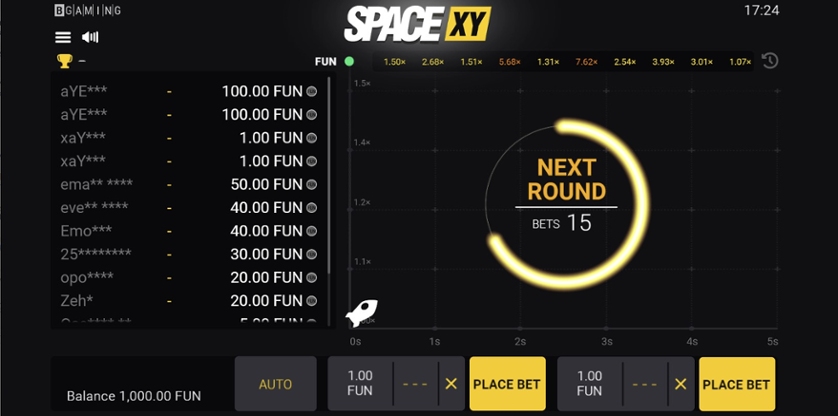
The result was a quality shift. Operators found they could no longer lean on simple reel mechanics alone. I watched game portfolios evolve, with a whole new category of “skill-influenced” or “interactive” slots emerging in direct response. The standard for a premium game experience was raised for good, which was a clear win for players watching closely.
Industry Reaction and Market Saturation
The industry moved fast. A flood of “clone” games entered the market, each trying to copy the XY grid idea. But most overlooked the essential balance between strategy and chance, leaning too far in one direction. That noisy period of saturation was, in itself, testament of the game’s huge impact.
It also drove real innovation. Major studios started investing in more complex game engines that moved past static reels. We began seeing bonus games with multi-stage decision trees and resource management mechanics. These concepts were once viewed as too niche, but Space XY Game proved they had mainstream appeal and could make money.
Impact on Design Philosophy

The longest-lasting impact is on design philosophy. Space XY Game showed a mass-market casino audience seeks mental engagement. It rendered narrative and progression systems legitimate in a space dominated by instant gratification. Today, design documents often include sections on “player agency” and “meta-game,” terms you would have had difficulty to find in a slot brief five years ago.
This shift led to a more diverse game library. We now see titles with light RPG elements, persistent player avatars, and objectives that transfer between sessions. The design mission grew from creating a moment of excitement to crafting a longer journey, a change you can trace directly back to the paradigm shift this game started.
The Coming Landscape After Innovation
The terrain is transformed for good. Space XY Game’s success revealed a significant, underserved market is present for casino games that make you think. The upcoming wave of innovation will probably explore richer story integration, social competitive features, and a continued blurring of lines between traditional gaming genres. The model for hybrid experiences is now solidly established.
For players, this signals a future of more immersive, diverse, and satisfying online casino sessions. For the industry, it marks a move away from commoditized content toward distinctive, mechanics-driven products. Space XY Game did beyond just add a new option to the lobby. It broadened the definition of what an online casino game can be, mapping out a new course for development and player satisfaction.